



This is a time of year of waiting for light, watching for light, welcoming light and perhaps most important—bringing light.
Even in this temperate zone of the northern hemisphere, I feel the increasing dark of longer nights as the sun’s path lowers in the southern sky. The light carries less heat at the deeper angle, the days begin with a chill and end with vivid vermilion sunsets as the low angled light sheds its colors in new formations. The shadows are long. Three sentinel liquid ambers in front of my house are nearly bare, and the ginkgos will soon drop their puddles of gold.
In the midst of these seasonal changes, the symbolic increase of darkness still casts its spell on our psyche. Like our ancestors, we light fires and candles to wait out the darkness with light. This time of year brings so many traditions of lights—Advent, Hanukkah, Kwanza, Winter solstice, Yule Logs and Evergreens. We gather, we sing and make music, we give gifts.

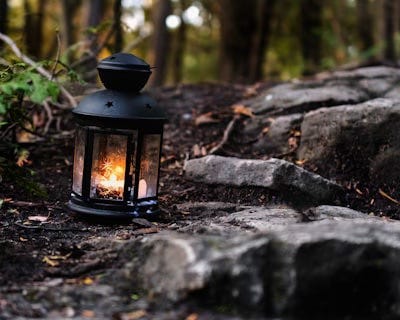
The missionary, Amy Charmichael, told a tale about climbing in a forest in India at night before there was a made path:
“I had only a lantern, and had to hold it very low or I would certainly have slipped on those rough rocks.
We don’t walk spiritually by electric light, but by a hand-held lantern. And a lantern shows only the next step--not several steps ahead.“1
Her story reminds me that we don’t always need to flood our darkness with brilliant illumination, which in fact can impede our progress. Sometimes what we need most is just enough light for the next step. And often, that light comes not from our own candle, but from another person’s presence.
The light of a candle.
Is transferred to another candle--
Spring twilight. 2

A spirit of hospitality turns away darkness and creates its own light. Waiting together can pierce darkness that seems overpowering when alone. I so admire people with a gift for hospitality—the ones who create welcoming space whenever they bring people into their home. There is a warm generosity, often expressed in their ease at feeding multitudes whether at a party or in their outreach to those who arrive in need or friendship.

I remember arriving at a friend’s home after a lonely Thanksgiving, just to drop something off. They had me stay for lunch—turkey soup on the stove, freshly made from the bird’s carcass the day before. I helped them cut up vegetables to add and then joined them in this simple meal. It is still a memory of the healing power of hospitality... and soup. That warm bowl was light for my next step out of loneliness.

But you may not feel gifted with that hospitality of home and hearth. There is an even simpler form of hospitality that is not hard to offer: the hospitality of a good listener.
Good listeners seem to have a presence that draws people to them. They are warm, invite trust and are easy to talk to. You leave their company feeling both understood and refreshed. This mostly comes across nonverbally, and I think of this power as a hospitality, a hospitality of the spirit. You can feel the welcome and acceptance of your listener, you experience the trustworthiness, you open a little bit more in their light.
This hospitality of listening is a state of mind. There may be an initial invitation—-”Would you like to talk about it, I’d be glad to listen” or “Tell me more”—and then there is a silent openness and invitation. Beyond non-verbal cues, there is also an intangible curiosity that reflects the listener’s willingness to set aside her self-focus and fully direct attention and effort to understanding the other person and their feelings.
We often think of hospitality as a kindness we offer to acquaintances, guests, even strangers, but it is also a caring attitude toward our family and those we know and love. We want them to feel comfortable, welcome and valued too.
When I feel disconnected from someone I love or care about, I know I have to slow down and really listen to them. I need to be attentive, not to a person I think I know so well that I know how they will react or respond, but as this unique person in my presence right now. I need to reconnect.

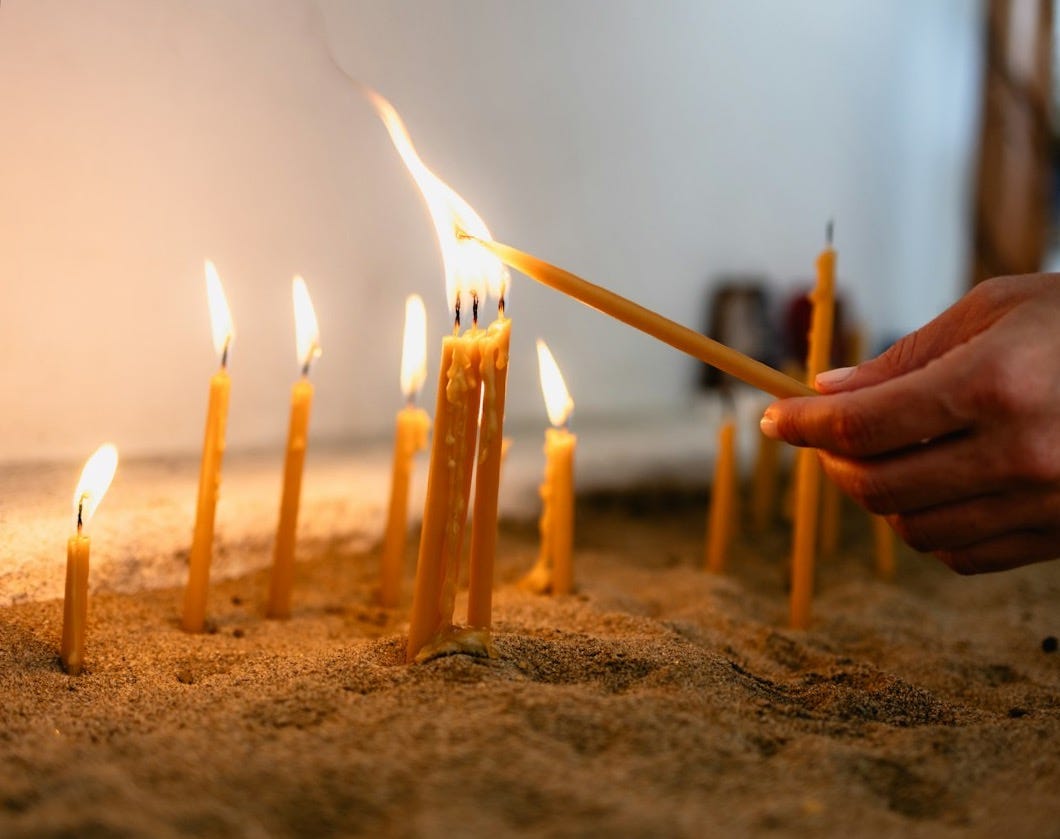
The hospitality of listening offers a light in darkness. It soothes the long wait for the return of one’s own light. When someone is walking through their own winter—through grief, uncertainty, loneliness, or fear—they don’t always need you to illuminate the whole path ahead. They need you to offer enough light to see the next step.
In this season of long shadows and early darkness, we light our candles and gather together. We make soup. We listen. We offer each other what the missionary learned in that dark forest: you don’t need to see the whole journey. You only need enough light for the next step. You may find light in someone else’s candle or you may light another’s with your own.
Carmichael, Amy, “Candles in the Dark”.
Buson, Yosa (1716-January 17, 1784)

I’m glad you are here and thank you for reading! Please click on the heart or leave a comment to connect with me and with other readers. I think of reading is closely related to listening. When you comment, I know I’ve been heard and I let you know that you have been heard.
Subscribe to “A Time for Listening” below and you will receive future Newsletters in your email. Right now my the whole Archive is open to all readers and I am grateful for each of you. There are over 60 posts about listening to one another and the natural world and the deeper listening to your own heart.
Substack is reader supported writing, my paid subscribers also have my deep appreciation for their encouragement and support. It will make my day if you join them.
If you enjoyed the post, but aren’t ready to subscribe, you can also show appreciation by buying me a coffee here while I’m waiting in the dark.
Leslie, this post feels especially poignant.
I've been writing about thresholds - mine and all who are feeling similar - standing in the darkness of liminal space, sensing internal shifts, an inner knowing that something is occurring, and slowly forming words to articulate. Not really needing floodlights, but a gentle, soft light to see the next step.
So fun seeing my nephew when he was so small, now a gorgeous big hunk of a man.
I remember that photo. He was an unusually beautiful child.
This is my first time listening; I like hearing your voice. It made me realize I am hearing your voice as I read all your essays.