


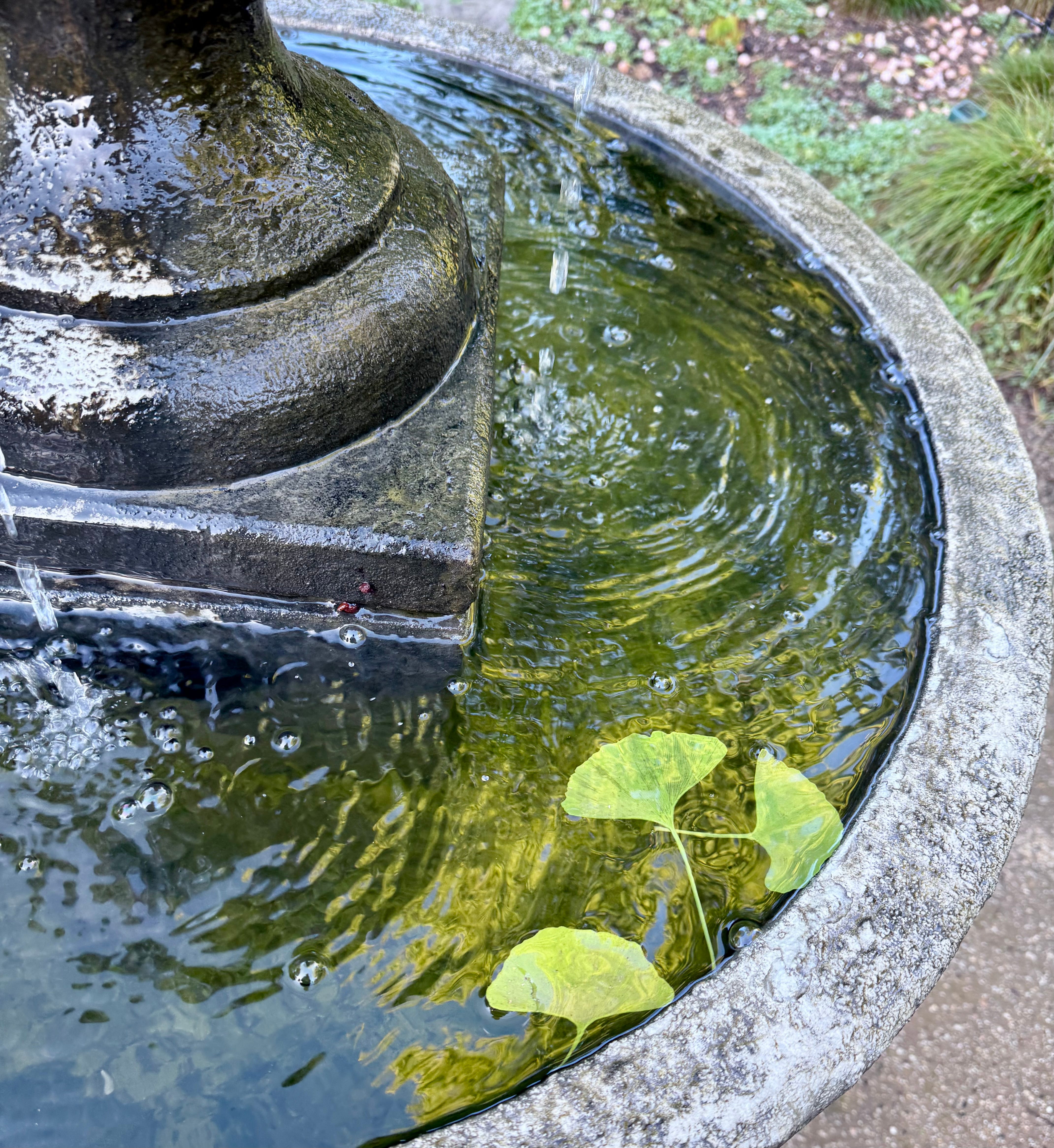
Last October in 2024, I shared with you how in Pasadena, this is the time of year we start to listen for rain.
November approaches and I’m listening for the rain. I’m waiting to inhale the scent of rain as it falls on dry thirsty land, the sweet gentle rains that come in late November and early December. As I clear and prune the garden, I’m not preparing for winter, I’m getting ready for the first spring, the false one, that tricks the land with a blossom of bright green, painted overnight on the foothills and vacant corners and sidewalk cracks — the green-up —the hot, dry summer is over, here come the rains.1
Last year it didn’t rain, there was no false spring to end the fire season. Most of Altadena, the town that slopes above me into the foothills of the San Gabriel mountains, was incinerated by wild whirlwinds of fire on January 6-7, 2025.

This year, the rain is here, on time, after the eight month dry season. It has been raining for days and forecast to continue into the next week. In occasional breaks between storms, the metallic gray clouds break into white galleons, sailing a blue and brilliant sky they have kept hidden for days and color erupts everywhere. I even walk on sky and flowers mirrored in the puddles. Then a new storm blows in.
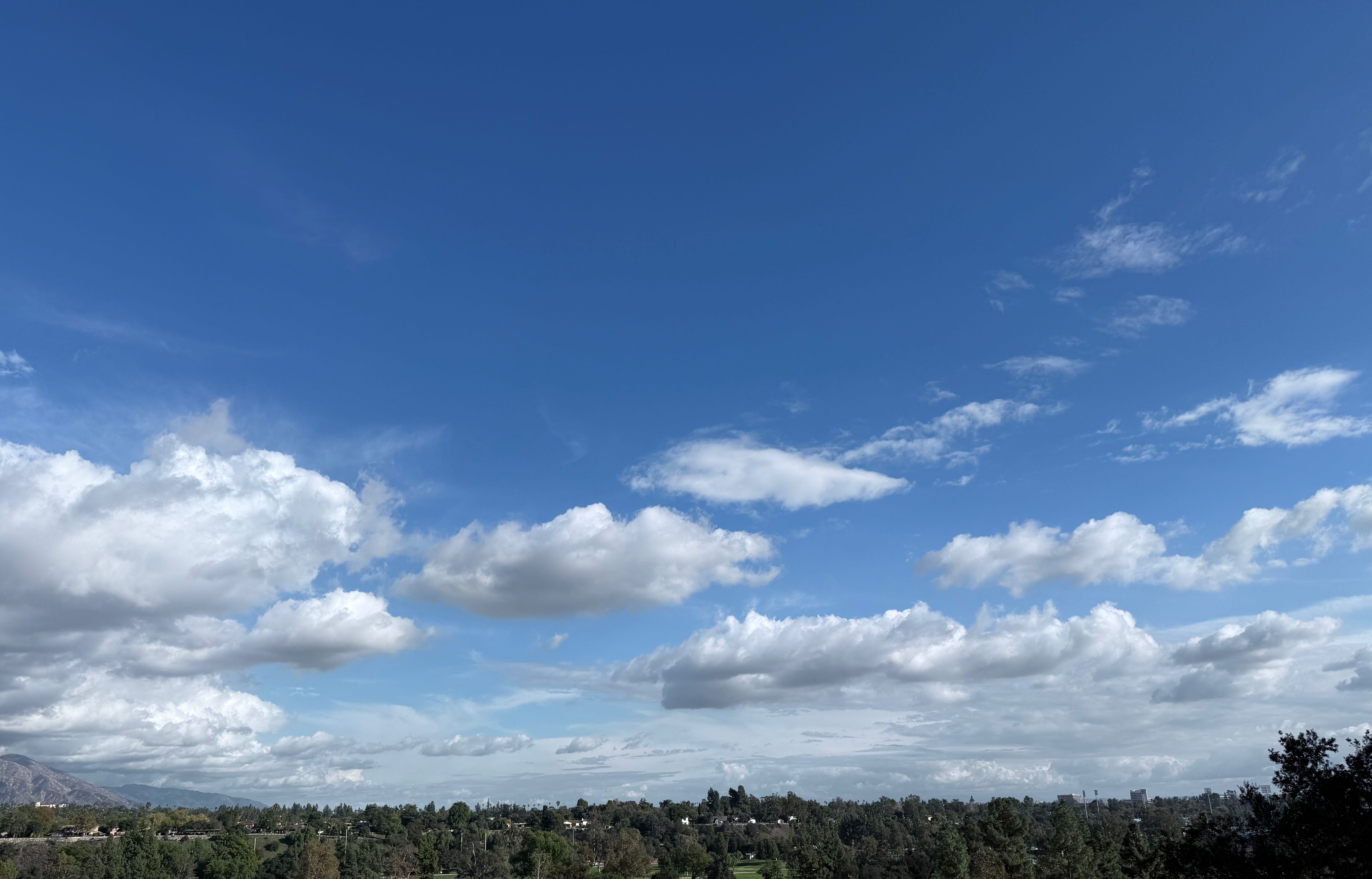
The ozone scent of the first rain is long gone, in the sunshine I walk in fresh air, listening and watching birds, squirrels and a very wet and bold young oppossum venture out to see what has been washed up in the rains.


Morning sun between storms slants through the tensioned water beading on leaves that look like they have been studded with diamonds. Some of the beads form magnifying lenses on the leaf surface revealing the secret pores and leaf mechanics.


The sun also glistens on the wet rocks and uncloaks their subtle colors, ochre, sienna, gray greens and blues. One rock has a small indentation that always fills with water if any is available, looking like a puddle in dry plain of reddish rock.



How often do you listen to the sound of rain on a roof, or umbrella or a tree you huddle under to avoid the wet? Do you notice how each surface sounds different, each type of rain has a unique rhythm? I think of percussive instruments being struck by hands or mallets or brushes. Rain has a voice.
In quieter times and places like the classical scholar gardens of Suzhou during the Ming dynasty in China, garden plants were chosen for the sound of raindrops falling on their leaves. Plantain and banana plants are said to have a distinctive sound in rain that evokes solitude, memory and gentle reflection. For centuries ancient poets connected the rhythms of rain and their own meters.
Night Rain
The cricket cried, then stopped to rest
The waning light goes out, now it’s clear.
Outside my window, the night rain lets me know …
The Banana leaf speaks first.
Bai Juyi also found as Po Chü-i, (772–846 ce)2
An attachment and connection of literature with the sounds of rain goes deep in human history and among its cultures. Anthologies are filled with poems about rain, in different moods—an April shower or a stormy night and all the rains in-between. The rhythms of rain can inspire the poet and poetry can mimic its cadence.
“In her Kenya memoir Out of Africa, the Danish author Isak Dinesen described a diversion she created one evening while harvesting maize with young Swahili laborers. As a way of amusing herself and them, she put together Swahili words in rhyming verse. The boys formed a ring around her and waited eagerly for the rhymes, laughing each time she came up with one. ‘I tried to make them…find the rhyme and finish the poem when I had begun it, but they could not, or would not do that, and turned away their heads. As they had become used to the idea of poetry, they begged: ‘Speak again. Speak like the rain.’”3
In my favorite poem about the rain’s voice Walt Whitman, in his wordy wonderful way, lets the rain tell its own story, in “The Voice of the Rain” 1885
And who art thou? Said I to the soft, falling shower,
Which, strange to tell, gave me an answer, as here translated:
I am the Poem of the Earth, said the voice of the rain,
Eternal, I rise, impalpable out of the land and the bottomless sea,
Upward to heaven, whence, vaguely form’d, altogether changed, and yet the same,
I descend to lave, the drouths, atomies, dust-layers of the globe,
And all that in them without me, were seeds only, latent, unborn;
And forever, by day and night, I give back life to my own origin,
and make pure and beautify it:
(For song issuing from its birthplace, after fulfillment, wandering,
Reck’d or unreck’d, duly with love returns.)4

Rain, it is how the water comes and goes. Water. We and the land are parched without it, soil dries into powder and blows away. Without water, plants become dry fuel for a wind driven firestorm and so do houses and anything in the path of that whirling wind and flying embers.
It stays with me still. Last October, I was waiting for rain, for a rainy season that did not come. In its place came a crazy hot dry wind out of the East and it brought fire. This year the rains have come, so I am grateful.

Bai Juyi also found as Po Chü-i, “Night Rain”
Dinesen, Isak, “Out of Africa”, quoted in Barnett, Cynthia, “Rain” (2015) pp 196-97.
Whitman, Walt, “The Voice of the Rain” (1884)

I’m glad you are here and thank you for reading! Please click on the heart and leave a comment to connect with me and with other readers. I think of reading is closely related to listening. When you comment, I know I’ve been heard and I let you know that you have been heard.
Subscribe to “A Time for Listening” below and you will receive future Newsletters in your email. Right now my the whole Archive is open to all readers and I am grateful for each of you. There is lots more about listening to one another and the natural world and the deeper listening to your own heart.
Substack is reader supported writing, my paid subscribers also have my deep appreciation for their encouragement and support. It will make my day if you join them.
If you enjoyed the post, but aren’t ready to subscribe, you can also show appreciation by buying me a coffee here.
Where I live in south west England it rains a lot. It’s raining now and I can hear the tune the rain is making as it drips onto our aluminium guttering and down the fall pipe by my bedroom door. There's an irregular rhythm and two or three high notes, then there’s a base note from the rain hitting the roof tiles. Thank you so much for making me truly listen. A lesson for life that the rain gives us.
Thank you for taking me back to the Ming gardens in Suzhou. I have lots of happy memories of rain in that part of the world. I especially remember the drizzle, which I heard called 毛毛雨 "mao mao yu" with 毛 meaning hair and 雨, rain.